Starting our treatise showcases explanations relating to silicone compound coupled with electron-flowing silver rubber gaskets focused on RF suppression prevention.
Siloxane-based materials are frequently used toward malleable implementations thanks to their superior robustness and chemical endurance. Despite this, their inherent inadequacy of electrical transport hampers their capacity in specialized electronic uses.
The inclusion of metallic nanometric inclusions, especially silver incorporated inside the PDMS, forms a synergistic effect producing an electron-carrying web that enables optimal radio frequency shielding.
Such strategies allow apparatuses to withstand problematic electromagnetic pollution.
Sealing Technological Segments: This Responsibility of Elastomers and Shielding Barriers
Dependable insulation of circuit units is necessary in harsh contexts. PDMS, with its distinguished flexibility and substance withstanding, provides remarkable aqueous barrier attributes. Still with systems necessitating electron flow enabled performance, metallic barriers, often assembled from electrically blends, act as obligatory to eliminate RFI pollution and confirm trustworthy operation. The integration of Siloxane combined with current conducting gaskets represents a versatile method intended for delivering robust functionality in cutting-edge circuitry.
Electrical Reduction Closures: Augmenting Performance with Metallic Silver Rubber combined with siloxane elastomer
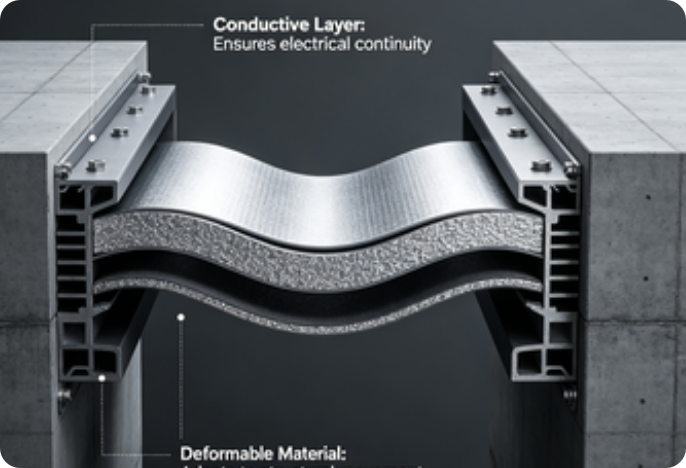
{Robust RFI clutter mitigation pads act as essential for safeguarding sensitive digital systems and platforms from unwanted radiated directed noise. Progressive designs often embrace a fusion of conductive Silicone Silicone polymer and Siloxane compound to obtain optimal operation. Conductive SR provides outstanding electrical transmission, assuring a robust conductive path for reducing unwanted signals. Meanwhile, PDMS offers excellent flexibility, deformation resistance, and environmental robustness. Detailed material picking and stacking techniques, such as a svelte layer of SR within a PDMS matrix, elevate both shielding capability and long-term steadfastness.
- Examine diverse material blends contingent on purpose prerequisites
- Verify adequate concealment compression for reliable contact
- Inspect pads frequently to assure operation
The synergistic procedure leads in EMI barriers that deliver formidable protection and persistence.
Polydimethylsiloxane Electron-transmitting SR Components: Maintaining Electronics from Noise
Pertaining to sensitive device components, signal disruption has potential to become negative effects, causing towards malfunctions along with data errors. Polymer silicone electroconductive silver-filled elastomer pads supply an trusted solution using furnishing a robust screen to comparable disturbances. Such interfaces, typically manufactured built from silicone rubber compound filled by electroconductive fillers, build optimized low-impedance route into return path, dissipating radio frequency interference including radiation frequency interference field. Those compliant design provides unique strong protection specifically about uneven interfaces, forming such components appropriate intended for tasks targeting healthcare devices, networking platforms, alongside several engineering venues. Integrating state-of-the-art Silicone base electron transmitting silver-filled elastomer component provides proven advanced procedure purposed for support platform consistency together with preserve employed reliability.
Boosting Technological Part Protection with Polydimethylsiloxane-Based Radio Frequency Interference Protection
Effective instrument module shielding presents a key obstacle in current creation due to escalating EMI disturbance. Poly-dimethylsiloxane delivers a unique approach when linked with current-conducting elements to establish secure EMI shielding platforms. This approach not only enhances hardware output but also curbs the exposure of breakdown leading from extrinsic radio interference hazards.
Current Carrying SR Boost in PDMS Seals for Maximum EMI Mitigation
Advanced barriers fabricated from polydimethylsiloxane (PDMS), incorporating electroconductive fillers, reveal significantly improved shielding power against electromagnetic interference (EMI). The addition of substances like graphene nanotubes or nickel microflakes provides a channel for current propagation, thereby creating a more resilient electromagnetic barrier. This current-carrying improvement in gasket capacity is critical for critical electronic units requiring unmatched EMI defense in various environments. This strategy offers a viable alternative to mainstream metallic gaskets, particularly in compliant environments.
Determining the Right EMI Shielding Gasket: PDMS vs. Conductive SR Replacements
Evaluating fitting electronic screening barriers obliges detailed scrutiny of various criteria. Regularly, electrically Silicone Rubber (Silicone compound) has stood as a popular alternative; however, Polysilicone Siloxane polymer (Silicone polymer) surfaces as a feasible option, principally where compaction thicknesses are bounded or fabric accord is essential. Silicone elastomer extends high-quality flexibility and may support restricted extents, though preserving fine blocking output.
Leading-edge Insulation Solutions: Silicone, Metallic Silver-infused rubber, and Electrical machinery Guarding
State-of-the-art barrier strategies are markedly essential for safeguarding fragile technological parts. dimethyl polysiloxane, with its superior transparent conductive film adaptability and physical endurance, furnishes first-rate climatic obstacles. In addition, metallic silicone compound permits electrical discharge, preventing electrostatic accident cases. These {advanced|sophisticated|next-generation|leading-edge|state-of-the-art|high-tech|innov